
This article was published as part of the Data Science Blogathon.
Introduction
Hello readers!
You must know the Python programming language for machine learning. Good, It has many advantages. But in the year 2012, a new programming language was introduced, Julia. Julia is a dynamic programming language that is flexible, Quick, scalable, easy to use and supports high speed math calculations. It also supports hardware including TPU and GPU mainly in all clouds. Supports an object-oriented programming paradigm. Hoy en día se ha vuelto popular en las aplicaciones de aprendizaje automático y deep learningDeep learning, A subdiscipline of artificial intelligence, relies on artificial neural networks to analyze and process large volumes of data. This technique allows machines to learn patterns and perform complex tasks, such as speech recognition and computer vision. Its ability to continuously improve as more data is provided to it makes it a key tool in various industries, from health..., including computer vision and natural language processing (PNL).
In this article, we are going to discuss some useful Julia libraries that are very useful for machine learning and deep learning. Then let's get started!!
Table of Contents
- Mocha.jl
- ScikitLearn.jl
- TensorFlow.jl
- Flow
- MLBase.jl
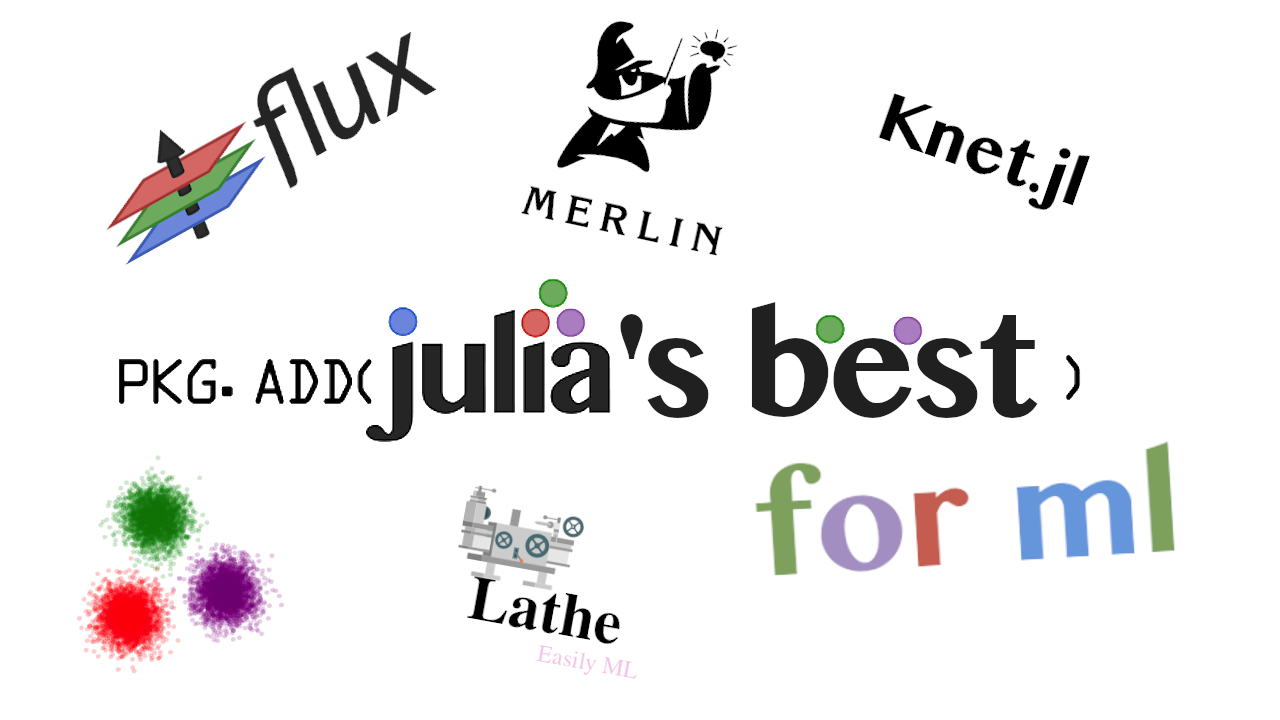
- Merlin.jl
- Knet.jl
Mocha.jl
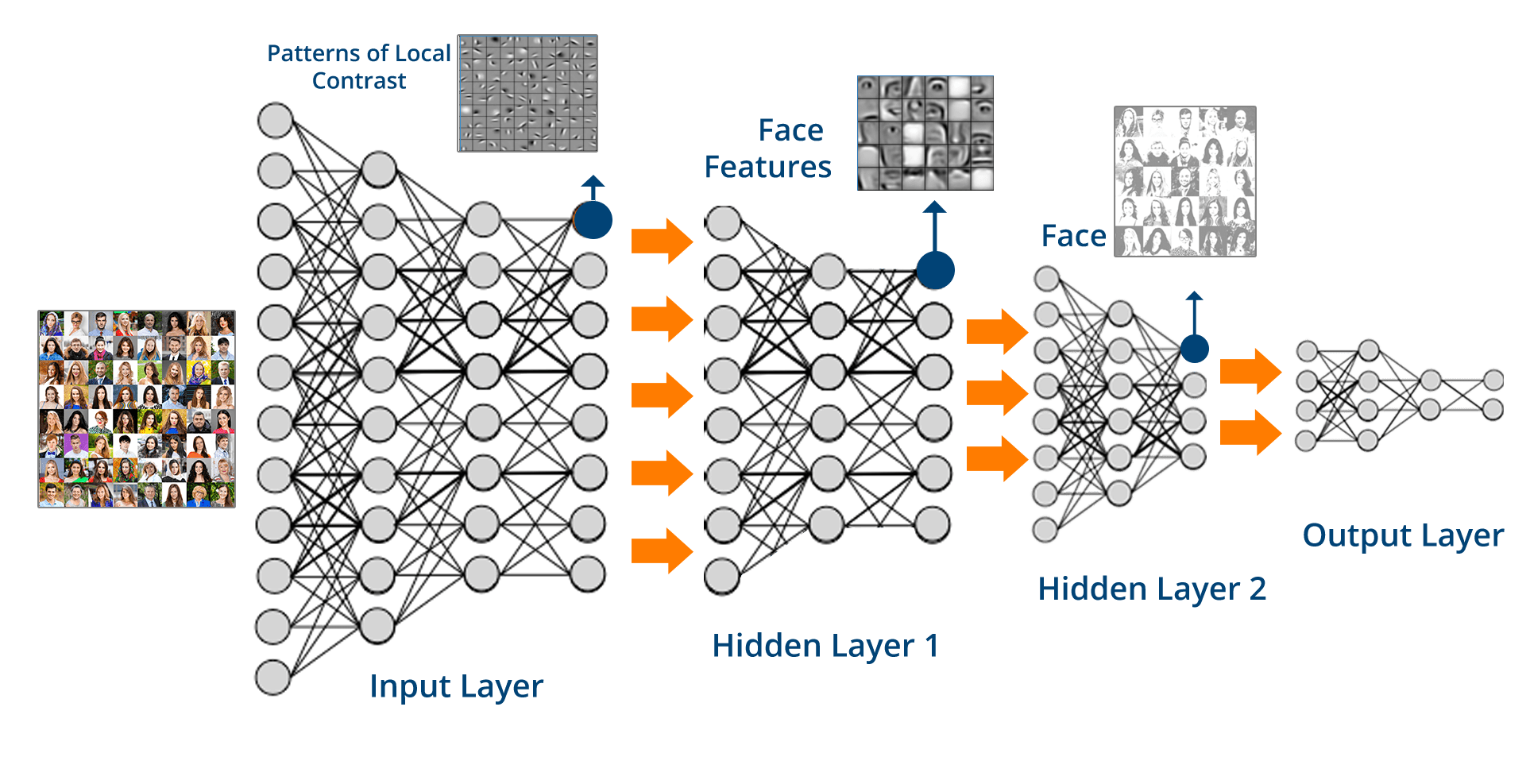
It is a deep learning library for the Julia programming language and is inspired by Caffe, a C framework ++. Mocha can be used to train shallow convolutional neural networks / deep, with trainingTraining is a systematic process designed to improve skills, physical knowledge or abilities. It is applied in various areas, like sport, Education and professional development. An effective training program includes goal planning, regular practice and evaluation of progress. Adaptation to individual needs and motivation are key factors in achieving successful and sustainable results in any discipline.... previo sin supervisión (optional) using automatic encoders (stacked).
Mocha Features
- Open Source: is open source and licensed by MIT.
- Compatibility: uses the HDF5 format to store snapshots of models and data sets, which facilitates cooperation with Numpy and Matlab.
- Correction and modularity: has a modular architecture
- High-level interface
- Modular architecture: easy to customize, compose and expand
- Minimal dependencies: no need to install external dependencies. Just run add[‘Mocha’] and you're ready to go
- Is written in julia
- Múltiples backends: this library accompanies a GPU backend, combining highly efficient NVIDIA libraries such as cuBLAS, cuDNN, etc.
Installation
To install this library, just run the following command:
Pkg.add(“Mocha”)
For more information, consult the official documentation. Link
ScikitLearn.jl
ScikitLearn.jl is a Julia container for ScikitLearn Library. Implement the famous ScikitLearn algorithms and interfaces in Julia. Has models from both the Julia ecosystem and the Scikit-Learn library. This library provides an easy-to-use interface for training and testing machine learning models. Has tools to build machine learning pipelines, model evaluation, cross validation and hyperparameter tuning.

Characteristics
- Has almost 150 Python and Julia models
- Cross validation
- DataFrames support
- Hpyer-paramteres tuning
- Unions of functions and channels
Installation
To install this library, just run the following command in the REPL:
Julia> ] add ScikitLearn
For more information, consult the official documentation. Link
TensorFlow.jl
Tensorflow is Google's famous open source Python framework for creating machine and deep learning models. Tensorflow.jl is a Julia wrapper around an open source machine learning framework Tensorflow. This container can be used for various purposes, such as rapid post-processing of calculated results, fast data ingestion mainly for data that is in unusual format, used for display, and the statistics calculation that does not have a canned vectorized run.
Installation
To install this library, just run the following command:
Pkg.add(“Tensorflow”)
For more information, consult the official documentation. Link
Flow
It is an open source deep learning and machine learning library in Julia. Provides a unique and intuitive way to define models, like simple math notation. Existing Julia libraries are distinguishable and can be directly consolidated into Flux models. The avant-garde models, for instance, neural ODEs are top of the line, and Zygote allows gradients with no overhead.
Flux is exceptionally hackable and can be changed anywhere, from GPU code to custom gradients and layers. Some of the Flux features include differentiable programming, ONNX, GPU and compiled code support.
Installation
Then, before using Flux, you must download the version first 1.3 or later of Julia. To download Julia, you can consult this guide Download Julia
After installing Julia, run the following command in Julia REPL to download Flux:
Julia> ] add Flux
For more information, consult the official documentation of Flow
MLBase.jl
It is Julia's package that does not implement any specific machine learning algorithm, but it provides some useful tools for machine learning use cases. It has a lot of useful tools to support machine learning programs.
Some of the tools that are present in this package are given below:
- Data manipulation
- Data preprocessing
- Performance evaluation (for instance, ROC-AUC)
- Model fit (hyperparameter setting)
- Cross validation
- Scoring Bases Classification
Installation
To install this library, just run the following command:
Pkg.add(“MLBase”)
For more information, consult the official documentation. Link
Merlin.jl
It is a deep learning framework written in Julia to train deep neural networks. This package is very underrated. But nevertheless, this would be a mistake as Merlin.jl is an unfathomable framework which has saved me a great deal of time in a wide range of events. How Flux.jl, Merlin is generally lightweight and written in code 100% Julia.
Marline, in general, will dominate Flux in many tasks, but nevertheless, that does not mean that it is constantly faster. It has an implicit GPU support with CUDA. Merlin models are easy to implement compared to Flux. The library aims to provide a flexible deep learning library, faster and smaller for machine learning.
Installation
To install this library, just run the following command in the REPL:
Julia> ] add Merlin
For more information, consult the official documentation. Link
Knet.jl
Knet is another deep learning package for Julia, with a little curve. Knet was created for use at the University of Koc. This is one of the best packages for beginners, since it is very easy to learn. This package is better maintained compared to other packages and libraries due to its vast community. Equally different from Flux and Merlin, Knet is a somewhat heavier package. This is not completely written in Julia, since it is written in different languages, for instance, C and MATLAB running below Julia's code. It must be considered, Nevertheless, that a small part of Knet is written in C and MATLAB, which represents approximately a 1,8 percent.

Installation
To install this library, just run the following command in the REPL:
Julia> ] add Knet
For more information, consult the official documentation. Link
Conclution
Then, in this article, we have covered the 7 top machine learning and deep learning libraries in Julia at 2021. Hope you learn something from this blog and it turns out better for your project. Thanks for reading and your patience. Good luck!
You can check my articles here: Articles
Thank you for reading this article on Python libraries for image processing and for your patience.. Leave me in the comment section. Share this article, it will give me the motivation to write more blogs for the data science community.
Email identification: gakshay1210@ gmail.com
Follow me on LinkedIn: LinkedIn
Media shown in this article about top machine learning libraries in Julia is not the property of DataPeaker and is used at the author's discretion.