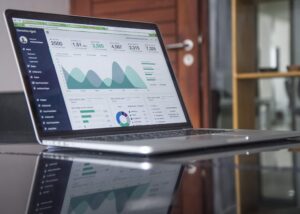

The augmented analytics is the use of enabling technologies such as machine learning, the artificial intelligence and natural language processing to help with data preparation, the generation and explanation of information. This way, improve the way people explore and analyze data on BI and analytics platforms. This paradigm “includes narrative and natural language queries, increased data preparation, advanced automated analysis and visual data discovery capabilities”.
By automating many aspects of data science, It allows democratizar el acceso a la analyticsAnalytics refers to the process of collecting, Measure and analyze data to gain valuable insights that facilitate decision-making. In various fields, like business, Health and sport, Analytics Can Identify Patterns and Trends, Optimize processes and improve results. The use of advanced tools and statistical techniques is essential to transform data into applicable and strategic knowledge.... avanzada and drive the data management.
To understand the contribution advanced analytics makes, it is necessary to understand that generating information from data is still a great challenge for companies. These tasks are usually performed by data scientists, that are scarce and expensive, and that they also spend most of their time collecting and data preparation (label them, cleaning them and other mechanical tasks), and even the initial analysis, all these tasks that require a lot of manual labor; with which they can only dedicate a small portion of the time to work the information The objective of the Augmented analytics is precisely to automate the data collection and preparation processes. to save data scientists and organizations a great deal of time and money.

You may be interested in continuing reading: Data management: 10 reasons why companies should invest

Elegant convergence
 The In reality, augmented analytics is nothing new: refers to the convergence of business intelligence and emerging fields of informatics, like artificial intelligence (HE) and machine learning (ML). But today it's gaining a lot of momentum.
As the next evolution of the foundation built by BI, analytics and big data, augmented analytics combines many emerging technologies for a platform that delivers information at a speed and a level of precision never before known. ML handles data preparation from big data (processing ingested data, preparing the relevant data, looking for patterns) and AI handles the initial analysis (using models and algorithms built by data scientists). With this they provide greater precision (avoiding possible manual errors), faster, reduce biases and increase resources by allowing trained staff to focus on finding useful information.
Keep reading:
The Augmented analytics enables automated and understandable dashboards, as well as descriptive and predictive approaches. In fact, is designed for analysis and reportingbusiness management automatically, with little or no supervision. Therefore, marketers and decision makers can use it directly without the help of a business analyst or data scientist.
In fact, by automating the generation of information in a company using advanced ML and AI algorithms, this evolution alleviates a company's dependence on data scientists. Therefore, the augmented analytics You can make analytics accessible to all SMB owners. At the same time, It will provide great advantages to medium-sized companies that are not in a position to face tailor-made solutions and developments, as well as large companies that need to value their data quickly.
Future of analytics
The same consultant who coined the concept of augmented analytics described it as “the future of data and analytics”. In fact, brings us closer than ever to that vision of “democratized analytics”, because it will be cheaper, easier and better.
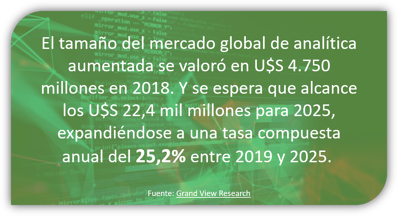
More than ll democratization of data, This evolution will effectively make it possible to democratize the conversion of knowledge offered by data, in perspectives. Any user, with a minimum of knowledge about how it works and what it contributes, will be able to obtain value relationships and approaches from the data stored by the organization.
Augmented analytics is particularly powerful in increasing customer awareness, identify consumption patterns, predict dropout rates, detect fraud, analyze business results, recognize account anomalies and more. and thus achieve what is called analytical advantage.
As you can see, augmented analytics can open up the data management game, allowing those companies that do not have experts in their ranks to extract value from them. A key possibility to maintain the possibilities to compete and provide better experiences to increasingly demanding customers.
Do you have questions about the increased analytics and the impact on your organization?
(function(d, s, id) {
var js, fjs = d.getElementsByTagName(s)[0];
if (d.getElementById(id)) return;
js = d.createElement(s); js.id = id;
js.src = “//connect.facebook.net/es_ES/all.js#xfbml=1&status=0”;
fjs.parentNode.insertBefore(js, fjs);
}(document, ‘script’, 'facebook-jssdk'));