
Overview
- Step-by-step guide to develop must learn skills to become a data scientist
- Features like MOOC, YouTube channels, blog pages, data science community websites to learn various skills
- Data science community websites like Kaggle, Driven Data, Analytics Vidhya for hands-on experience with data sets and
other useful machine learning techniques
What is data science?
Data science is about “Using various techniques, algorithms for analyzing large amounts of data sets (both structured and unstructured), to extract useful information about the data, applying them like this in several commercial domains”.
Why is there a demand for data scientists?
Data is generated day by day at a massive rate and to process such massive data sets, large companies are looking for good data scientists to extract valuable information from these data sets and use them for various strategies, business models and plans.
Table of Contents
- Learn Python
- Learn statistics
- Data collection
- Data cleansing
- Knowledge of EDA (exploratory data analysis)
- Machine learning and deep learningDeep learning, A subdiscipline of artificial intelligence, relies on artificial neural networks to analyze and process large volumes of data. This technique allows machines to learn patterns and perform complex tasks, such as speech recognition and computer vision. Its ability to continuously improve as more data is provided to it makes it a key tool in various industries, from health...
- More information on the implementation of the ML model
- Real world tests
- Exploring and practicing data sets in Kaggle, Analytics Vidhya
- Curiosity analyticsAnalytics refers to the process of collecting, Measure and analyze data to gain valuable insights that facilitate decision-making. In various fields, like business, Health and sport, Analytics Can Identify Patterns and Trends, Optimize processes and improve results. The use of advanced tools and statistical techniques is essential to transform data into applicable and strategic knowledge....
- Non-technical skills
1. Learn Python
The first and main step towards data science should be a programming language (namely, Python). Python is the most common coding language, used by most data scientists, due to its simplicity, versatility and being pre-equipped with powerful libraries (like NumPy, SciPy and Pandas) useful in data analysis and other aspects in Data Sciences. Python is an open source language and supports various libraries.
Resource:
MOOC: Udacity Python Course, Coursera Python Course
Youtube Channel: Krish Naik, Code basics
Blogs: Analytics Vidhya, Nuggets de KD
2. Learn statistics
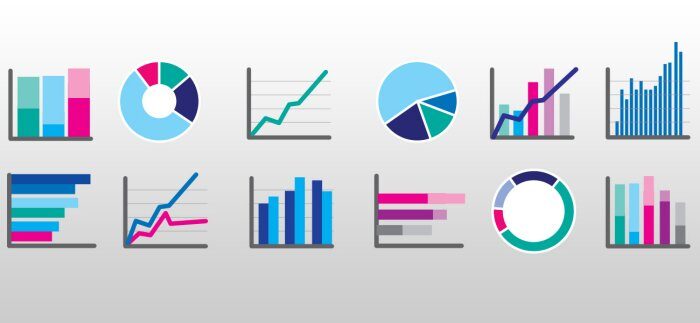
And Data science is a language, then statistics is basically grammar. Statistics is basically the method of analysis and interpretation of large data sets. When it comes to data analysis and information gathering, the stats are as remarkable as air to us. Statistics help us understand the hidden details of large data sets
Resource:
MOOC: Coursera Statistics Course
Youtube Channel: Krish Naik, Code basics
Blogs: Analytics Vidhya, Nuggets de KD
3. Data collection
This is one of the key and important steps in the field of data science.. This skill implies knowledge of various tools to import data from both local systems., as CSV files, and extract data from websites, using beautifulsoup python library. Scrapping can also be API-based. Data collection can be managed with knowledge of Query Language or ETL pipelines in Python
Resource:
MOOC: Collecting Coursera Data with Python
4. Data cleansing
This is the step you spend most of your time as a data scientist. Data cleansing is about getting the data, suitable for work and analysis, by removing unwanted values, missing values, categorical values, outliers and incorrectly submitted records, from the raw form of the data.. Data cleaning is very important as real world data is messy by nature and to achieve this with the help of various Python libraries (Pandas y NumPy) is really important to an aspiring data scientist.
Resource:
Blog: Python data cleansing blog
5. Knowledge of EDA (exploratory data analysis)

EDA (exploratory data analysis) is the most important aspect in the vast field of data science. Includes analyzing various data, variables, various data patterns, trends and extract useful information from them with the help of various graphical and statistical methods. EDA identifies several patterns that the machine learning algorithm might not identify. Includes all handling, data analysis and visualization.
Resource:
Data Science Communities: Kaggle, Vidhya Analytics
Blog: EDA in iris dataset
YouTube channel: EDA videos in Krish Naik, Code basics
MOOC: Coursera Course on EDA, statistics, probability
6. Machine learning and deep learning
Machine learning is the primary skill required to be a data scientist. Machine learning is used to build various predictive models, classification models, etc., and large companies, the companies, use it to optimize their planning based on predictions. For instance, car price prediction
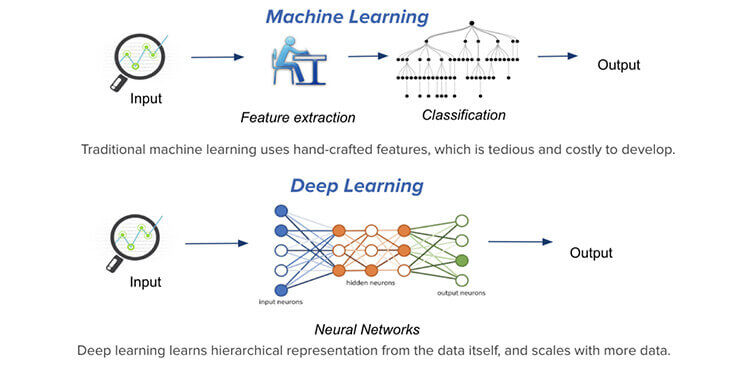
Deep Learning, Secondly, is an advanced version of Machine Learning that implements the use of Neural Network, a framework that combines multiple machine learning algorithms to solve various tasks, to train data. Several neural networks are a red neuronal recurrenteRecurrent neural networks (RNN) are a type of neural network architecture designed to process data streams. Unlike traditional neural networks, RNNs use internal connections that allow information from previous entries to be remembered. This makes them especially useful in tasks such as natural language processing, Machine translation and time series analysis, where context and sequence are central to the... (RNN) or a red neuronal convolucionalConvolutional Neural Networks (CNN) are a type of neural network architecture designed especially for data processing with a grid structure, as pictures. They use convolution layers to extract hierarchical features, which makes them especially effective in pattern recognition and classification tasks. Thanks to its ability to learn from large volumes of data, CNNs have revolutionized fields such as computer vision.. (CNN), etc.
For instance: facial recognition
Means:
Data Science Communities: Kaggle, Vidhya Analytics
Blog: Analytics Vidhya, Nuggets de KD
YouTube channel: videos in Krish Naik, Code basics
MOOC: Curso de Coursera Machine Learning, Coursera Deep Learning Specialization
7. Learn how to implement the ML model
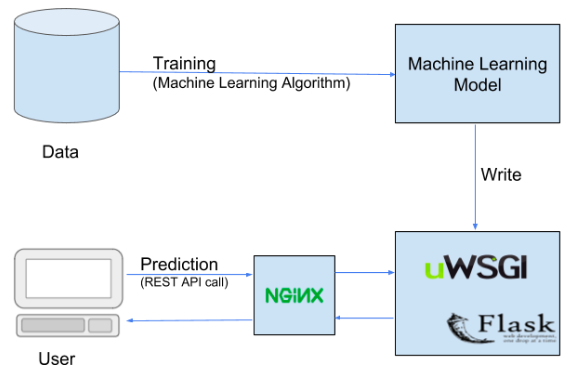
Deployment is basically the process of making your machine learning model available to end users for use.. This is achieved by integrating the model with various existing production environments., thus implementing the practical use of the ML model for various business solutions.
There are many services to implement your ML model like Flask, Pythoneverywhere, MLOps, Microsoft Azure, Google Cloud, Heroku, etc.
Means:
YouTube channel: AA implementation videos at Krish Naik, Code basics
Blogs: Analytics Vidhya, Nuggets de KD
8. Real world tests
Testing and validation of the machine learning model should be performed after implementation to verify its effectiveness and accuracy. Testing is an important step in data science to keep the efficiency and effectiveness of the ML model in check.
There are several types of tests like A / B, AAB Testing, etc.
9. Exploring and practicing data sets in Kaggle, Analytics Vidhya

The world's largest data science communities like Kaggle, Analytics Vidhya is very useful for getting in touch with various data sets and, Thus, can be used to practice various data analysis techniques, machine learning algorithms. Contests held in these communities are also helpful in improving data science skills., helping us achieve our goal of becoming data science proficient faster..
10. Analytical curiosity
The field of data science is a field that is evolving at a faster rate., Thus, requires an innate curiosity to explore more about the field, regularly updating and learning various skills and techniques.
This is the main skill that will always help us to maintain, update new skills and concepts, thus preventing us from falling behind several technological advances in data science.
11. Non-technical skills
Non-technical includes teamwork, communication skills, Task management, business understanding, etc
Teamwork plays an important role in delivering the result to companies, companies where we work as data scientists.
Communication skills allow us to express our technical ideas, concepts to various officials / non-technical authorities of the Firm.
Task Management involves proper planning and management for the delivery of the solution.
Understanding / business acumen o understanding about the industry we are working in is very important for various analysis and effective solutions for the problems in those industries.