
There are not few analysts who argue that, Contrary to common sense, periods of recession are the best to invest. One of the most important arguments is that after the storm, if we maximize the time and resources to prepare, we will be better than the competition or at least we will not be left behind. And if we think that today the greatest asset a company has is its data, invest in them: management, cleaning, data analysis– It is the best strategy that we can evaluate in the medium and long term. Why?

"You can't save to get out of a recession; you have to invest to get out of it “ – Intel
(Source: The Economist)

Is it contradictory to invest?
In the middle of a digital transformation process Contextualized by the Coronavirus pandemic, the largest and most immediate current trend is a move toward cost containment.
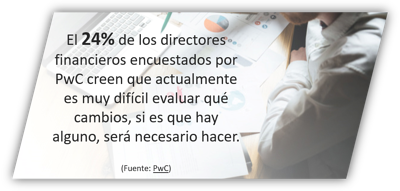
But nevertheless, increasing IT spending now is the best possible measure for the current recession and for post-pandemic planning.
Some changes that we are seeing that justify an investment in IT are:
- Social isolation made work largely remote. This undoubtedly opened the doors to new technologies that facilitate work interactions..
- Secondly, entering data from multiple sources can be confusing, which makes data optimization a basic need.
- The increase in online sales implies the need for technological tools to automate operations.
- Customer service is purely virtual: efficiency and speed are two of the pillars that technology can contribute.
Now, one of the prevailing ideas is that even when the crisis is over, new habits will have been formed and the post-pandemic world will look very different from the pre-pandemic world. To be able to accompany this new world that is being forged, it will be almost essential to make a change in the investment in IT.
Invest in data: why?
 But if we get to the bottom of the matter … Invest in what? In technology, in infrastructure, in connectivity? ¿Hardware o software? The answer that many analysts risk is: data! But, What does it mean to invest in data?
One of the answers is to strengthen data governance, which means that companies improve their data analysis strategies to take the pulse of their operations. Not a few CIOs have seen an increase in requests for data analytics, and business leaders are looking for more real-time instrumentation of their business health, including customer information.
At a time when we make daily decisions with changing information and factors beyond our control, data analysis is crucial.
To benefit from knowledge of the data, companies must achieve a data-driven organizational culture. That means:
- Team members are data experts: In efficient organizations, employees must be able to do their jobs, interpret the data that measures their performance and adjust what they do accordingly. Every company should strive to hire and train to achieve this, even in roles that are not explicitly dedicated to data analysis.
- That decisions are based on data– Leaders at all levels should aim for decisions to be based on reporting on relevant growth metrics. This helps to ensure that actions are not taken by “instinct” and that limited funds are spent where they can have the greatest impact.
- Establish communication channels between departments.– This ensures that leaders across the company can compare results and help the company as a whole meet its growth goals.. Problems and solutions are rarely isolated to a single section of a company; rather, equipment often becomes watertight compartments, especially in growing organizations, where processes can arise. to this because there is no sense of general purpose. Deliberation on interdepartmental communication can alleviate this problem.
If we think of a post-pandemic scenario, where the changes that occurred in the way we work and interact with our customers seem to have changed forever, Investing in IT and especially in strengthening data management is key. We make sure that the entire organization generates valuable information so that the data is what allows us to solve problems and make the right decisions, today is a topic that should not be missing from the agenda.