
This article was published as part of the Data Science Blogathon.
Introduction
Many companies still believe in creating their own framework for data pipelines and do not use existing tools even though that requires a wide range of skills.. The traditional way to do ETL is to do it manually with code and it is not a one person job. Traditional ETL can be considered a bottleneck, but that doesn't mean it's priceless.. Let's understand the current scenario here!
ETL in a nutshell
As data enthusiasts, we all must have come across this term frequently when dealing with data every day, truth? As usual, data engineers take care of all this work, but even data analysts, data scientists and business intelligence engineers must have hands-on experience.. Not all companies will provide clean data for direct analysis and reporting; some will look forward to working collaboratively with data engineers to create scalable and efficient final data pipelines.
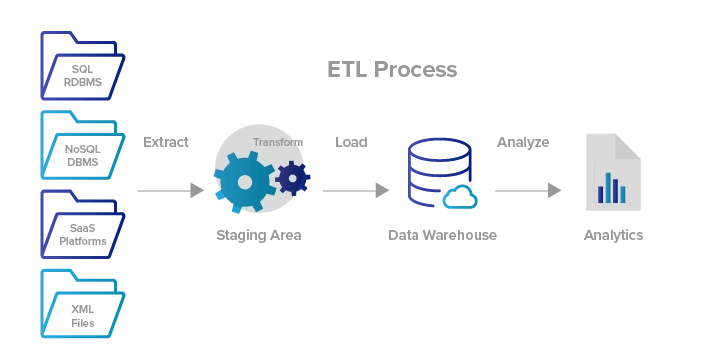
Why is it so hyped?
Large companies especially hire ETL developers, ETL specialists who only manage data integration and design data warehousing for them. The process of 3 steps seems simple, but behind the scenes, there are hundreds of extremely cumbersome things to handle extracting data from various sources, especially the data itself has gotten much bigger and messier.
It's the most challenging part of the entire data flow and you can't afford to mishandle crucial information before moving on to the next step.. After transforming the clean and validated data into the desired way, safe to store in data warehouse for data modeling and analysis purposes. Various risks are involved during the initial stages of the production phase and that is why more are paid. Knowing the input and output of data is the basic foundation for any data-related function and it is mandatory to have a basic idea of how to use data intelligently with available resources..
How to perform ETL?
There are different workflows in the data pipeline and they can be performed in 2 shapes:
- Talend
- Informatica
- Alteryx
- SSIS
- Amazon Redshift
- Xplenty
- QlikSense
- Piton
- R
- SQL
- Java
- Apache pig
Codeless ETL vs. Manual ETL
A no-code ETL platform requires little to no coding. The tools provide easy-to-use GUI with various functionalities to create a data map. Once the data map is complete, teams just have to run the process and the server will do its job. The process is easy for customers to understand and easy to maintain. It is scalable and saves a lot of time and money for companies managing data sets in real time. Logic is reusable for any Data SourceA "Data Source" refers to any place or medium where information can be obtained. These sources can be both primary and, such as surveys and experiments, as secondary, as databases, academic articles or statistical reports. The right choice of a data source is crucial to ensure the validity and reliability of information in research and analysis.... and custom data manipulation features are available. There are pay-as-you-go ETL subscriptions and services that run on a cloud server with millions of data. Therefore, the company should choose the tool wisely according to the use case and customer requirements.
Even non-technical employers must be trained to schedule workflows, jobs and tasks to become familiar with the tool. There are companies that encourage code-free practices to develop various products..
According to IT research firm Forrester, the market for low-code development platforms will reach a value of $ 21,2 billion for 2022, growing at an annual rate of 40 percent. What's more, the 45 percent of developers have already used a low-code platform or expect to do so in the near future “. [1]
Coding your own exhaust pipe is tempting but difficult at the same time. Many companies adapt writing Python scripts to extract, transform and upload data even in a cloud environment. Any type of code customization can be done if something is not available in the existing ETL solution. Coding our own ETL can be of great benefit in terms of flexibility and performance optimization. If there is an expert data engineer on board who knows ETL processes, the ETL process can be adjusted to run as smoothly as possible. Tedious coding is useful in self-services where one can independently preprocess data.
Questions? Changing the code and maintaining the scripts can be a big problem if ETL doesn't work well for complex schemas. Automating manual ETL requires other tools such as Selenium, the Windows Task Scheduler to automatically run scripts on a daily or weekly basis to store data in Excel or a databaseA database is an organized set of information that allows you to store, Manage and retrieve data efficiently. Used in various applications, from enterprise systems to online platforms, Databases can be relational or non-relational. Proper design is critical to optimizing performance and ensuring information integrity, thus facilitating informed decision-making in different contexts..... Therefore, are designed for a specific set of users and data operations.
Do you love to play with dirty data and clean it??
If you like to experiment with data manually checking for all errors and normalizing the data, so implementing multiple Python and R packages is a good way to do it. Even writing SQL queries can be interesting and challenging to extract information from messy data. This can help you gain an in-depth understanding of the logic behind managing data from scratch rather than starting with a tool first..
Bottom line: It all depends on several parametersThe "parameters" are variables or criteria that are used to define, measure or evaluate a phenomenon or system. In various fields such as statistics, Computer Science and Scientific Research, Parameters are critical to establishing norms and standards that guide data analysis and interpretation. Their proper selection and handling are crucial to obtain accurate and relevant results in any study or project.... such as the size of the data, memory and budget to choose the optimal solution for business problems. What's more, the choice of the ETL approach varies depending on the level of technical and non-technical expertise of a company.
Final thoughts
This is quite a debatable topic and both have their advantages and disadvantages.. ETL tools are not dead, but they are not preferable by all. One could now end up with unnecessary overhead of using an ETL tool where it is not needed, which also hosts business logic that is not transferable outside of the ETL tool.. But the skills developed by creating ETL pipelines using Python or SQL will always stick together for years to come..
Current ETL tools can go out of style and adapting to new ones can be difficult for some people. Therefore, even tools can become a nuisance for a business if not used correctly. Regardless of manual or no-code ETL, the whole process itself is complicated but also very interesting to learn.
What is your favorite? Let me know in the comments!!
Thanks for reading this article.
Reference
[1] How low-code platforms are transforming software development
About the Author:
Saloni Somaiya works as a data scientist at a healthcare startup in the United States. Earned a master's degree in information systems from Northeastern University, Boston. Likes to read articles and explore new technologies. She is willing to contribute more to the field of science and data analysis.
LinkedIn: https://www.linkedin.com/in/saloni-somaiya/
The media shown in this article is not the property of DataPeaker and is used at the author's discretion.