
Service Oriented Architecture seeks to actively participate in business transformation but requires motivation. One of the drivers of change must be the need to increase the flexibility to improve responsiveness. Of all the drivers of the service-oriented architecture (SOA) Perhaps this is the common denominator for organizations of various kinds, from different sectors, since in all cases the dynamism of the markets imposes on companies the need to adapt to their demands.
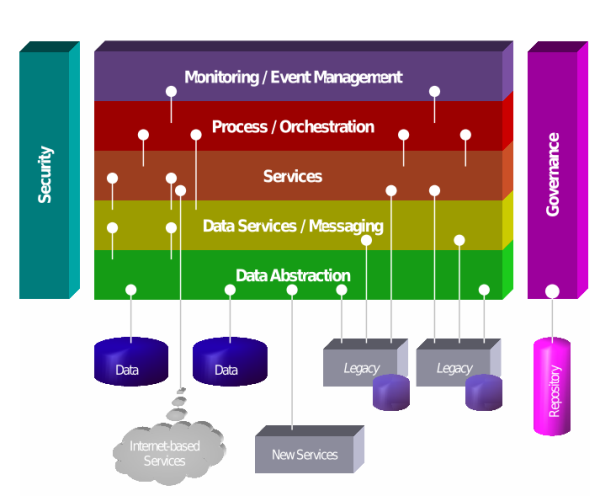
Photo credits: Cnb
What is the evolution that favors service-oriented architecture?
SOA, service-oriented architecture allows you to achieve goals that could not even be set before your appearance, enabling companies to experience a new reality where objectives such as:
-
Optimization of processes: allowing the maximum update applicable to your design.
-
Possibility of enjoying shared services at reduced costs: avoiding the appearance of problems related to the quality of the data, such as duplications or inconsistencies.
-
Standardization: applicable to different business areas and expandable to different process components.
Flexibility is the key to providing SOA to the company but, to reach the desirable level, it is necessary to avoid making mistakes along the way, Taking into account that, In most cases, the errors come from the initial approach, extending from the starting point to impact the results in a negative. To avoid them, Knowing the path to success is essential, a path that will facilitate the making of the best decisions regarding service-oriented architecture.
The roadmap of service-oriented architecture
The adoption of SOA and the transition to such an environment requires planning. Among the areas to be planned are:
-
Service-oriented architecture infrastructure: its scope covers both the standards to be met, as the technology support platform.
-
Architectural problems: must always ensure alignment between needs and goals, without losing sight of the restrictions that apply to the means to achieve them.
-
Organization and managementn: consists of the coordination of the entire program that cannot ignore the definition of roles and assignment of responsibilities.
-
Processes: They must be adjusted to the possibilities of the technology and the uses they want to give it, being the nexus between infrastructure and projects.
The keys to the success of a service-oriented architecture project
In addition to the detailed planning that covers all the areas exposed in the previous section, a The successful service-oriented architecture project must ensure that other needs are met., who are the ones that will make the impact of SOA be as expected:
- Company culture: in relation to the vision and objectives of the SOA projectThe initiative, its purpose and scope should be shared with all levels of the organization; specifying what results are expected and how they will be achieved. Only in this way can it be ensured that the implications of the new way of working that will lead to a service-oriented architecture are understood..
- Learning: training and information are essential to maximize performance and avoid mistakes. The training must be aimed at all members of the organization who, one way or another, will interact with the Service Oriented Architecture.
- Integration: integration in the processes will be carried out progressively, always based on an adequate programming that combines strategic and operational vision, to minimize risk.
- Reengineering: continuous improvement is a necessity in everything related to the concept SOA, like the update too. Both must be guaranteed and that is why the approach of any service-oriented architecture project must be inspired by a cyclical format.
Related Post:
(function(d, s, id) {
var js, fjs = d.getElementsByTagName(s)[0];
if (d.getElementById(id)) return;
js = d.createElement(s); js.id = id;
js.src = “//connect.facebook.net/es_ES/all.js#xfbml=1&status=0”;
fjs.parentNode.insertBefore(js, fjs);
}(document, ‘script’, 'facebook-jssdk'));